
Welch calls on Netflix CEO to ensure fair competition for creators if proposed merger with Warner Bros. Discovery prevails
WASHINGTON, D.C. — U.S. Senator Peter Welch (D-Vt.), a member of the Senate Judiciary Subcommittee on Antitrust, Competition Policy, and Consumer Rights, today questioned executives of Netflix and Warner Bros. Discovery, Inc. (WBD) about how their proposed merger could negatively impact America’s creative community. Senator Welch underscored the importance of protecting fair competition practices to ensure creators, writers, and producers can continue to share unique content with consumers.
“The big concern I have is: what’s the impact on the creative community? If this merger goes through, [Netflix will] be huge, and the folks that are creating content will have to come to you. And it’s hard to see how—with fewer outlets for a person or creators who have something special to present to the American people—if they have fewer options it’s going to suppress creative content,” said Senator Welch to Netflix Co-CEO Ted Sarandos.
Watch Senator Welch’s full remarks below:
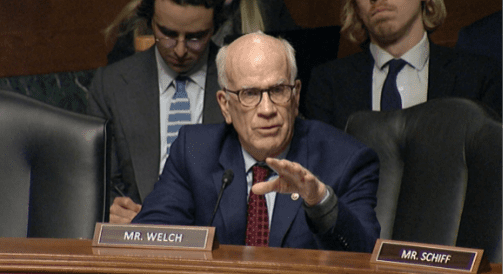
Read key excerpts from Senator Welch’s exchanges with Warner Bros. Chief Revenue and Strategy Officer Bruce Campbell and Netflix Co-CEO Ted Sarandos:
Senator Welch: “What I understand is that the Writers Guild of America, after the Warner Bros.-Discovery merger in 2022, the merge firm cancelled and wrote off about $2 billion in content. That’s true, right?”
Warner Bros. Chief Revenue and Strategy Officer Bruce Campbell: “After the merger there was a significant write-off. That merger included a significant amount of debt being put on the combined companies. So, at least initially, we had some meaningful financial considerations. Since that time, we have invested significantly in content, and our content investment has grown every year.”
Senator Welch: “This is really the question that I need to be answered. I think it’s incredibly important that we have more content, not less. I think it’s incredibly important that we have creators and writers and producers having an opportunity to get their story to us to try to get the benefit of stories that are told to America about our own experience. It’s just hard for me to understand how if there are fewer buyers—where there is less opportunity for competition—it’s going to result in more content. You’re telling me I’m wrong?”
…
Senator Welch: “You know, there’s something wonderful in the culture of a good company, right? And Warner Bros. has done extraordinary things. But it’s really—as I understood it—been really committed to movies, and creating incredible movies. Netflix is astonishing in what it’s done out of nothing. It creates streaming, which is very, very popular—all of us use it. But if [Netflix] is going to be in charge of Warner Bros., you’d like to say that nothing will change. But don’t we usually hear that anytime there’s a big merger? That nothing will change, and it’ll all be better? So, prove it.”
Netflix Co-CEO Ted Sarandos: “Senator Welch, I’d like to explain that, because as I said earlier today, most media mergers have fared poorly—I agree…This media merger will be different than any of the others because we actually need these people, we need those movies, we need those series. So, we’re going to keep them all operating, and I want them to compete with one another, just as if we didn’t own them.”
…
Senator Welch has led bipartisan efforts to protect the arts and artists’ creativity in the Senate. In December, Senators Welch and Marsha Blackburn (R-Tenn.) introduced the Visual Artists Copyright Reform Act (VACRA), bipartisan legislation to modernize copyright registration for visual artists and make it easier for high-volume visual artists to register and protect their works. Senators Welch and Blackburn also reintroduced their bipartisan Transparency and Responsibility for Artificial Intelligence Networks (TRAIN) Act, legislation to help musicians, artists, writers, and others access the courts to protect their copyrighted works if, and when, they are used to train generative AI models.
###