
Welch calls on Congress to pass his bicameral Justice for Hind Rajab Act
WASHINGTON, D.C. – U.S. Senator Peter Welch (D-Vt.) today spoke on the Senate floor to outline essential elements of any agreement between the United States and Cuba, amidst President Trump’s ongoing oil blockade and reports of a possible “deal” between the countries. In his remarks, the Senator warned that the Trump Administration’s current oil blockade is inflicting collective punishment on the Cuban people, causing widespread food insecurity and power outages, and the collapse of basic services.
Senator Welch urged President Trump to prioritize the national interests of the United States and the well-being of the Cuban people in any agreement reached, including ending restrictions on Americans’ right to travel to Cuba, supporting Cuba’s private sector, and removing Cuba from the list of state sponsors of terrorism. Senator Welch also called on Congress to repeal the U.S. embargo:
“Let me be clear. No American president, no American president—under any circumstances, friendly or unfriendly—should threaten to take over another sovereign nation, whether Cuba, Greenland, or anywhere else. But rather than threats of a takeover, the United States should, should, negotiate a solution with Cuba, which, above all else, puts U.S. national interests—and as I’ve said—the needs and aspirations of the Cuban people first.”
The Senator also called on Cuba’s leaders to abandon central planning of the economy, take steps to enable U.S. companies to compete for contracts to help rebuild Cuba’s infrastructure, and release political dissidents. Senator Welch urged the two countries to agree on a mechanism for resolving property claims:
“I urge the Trump Administration and Cuba’s leaders to take the steps I’ve outlined, to stop the suffering and repression in Cuba, and finally put an end to the decades of hostility between our two countries. I believe they would receive overwhelming support from people of both countries, as well as overwhelming support here in the Congress.”
Watch Senator Welch’s full remarks below:
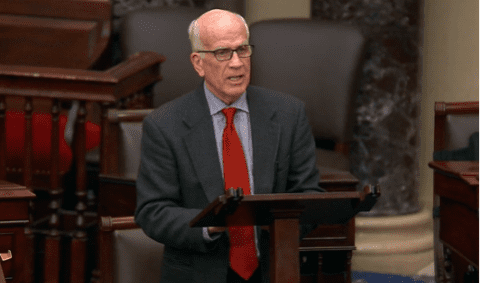
Read a key excerpt from Senator Welch’s speech below:
“Cuba is a small, bankrupt country that has neither the capacity nor the intention to threaten the United States. Even before the Trump Administration cut off oil from Venezuela and started blocking oil shipments to Cuba from other countries, electricity blackouts were common, and today electricity is unavailable—unavailable—for most hours of the day and across the entire island. And just think of what that means for homes, for hospitals, for schools, for factories, for farms, trash collection, and public transportation—all of the essentials of daily life.
“It is absolutely catastrophic. How does one produce? How does one transport? How does one refrigerate food without fuel? How do you pump and transport water? How do you power ambulances; operating rooms; incubators? You simply can’t do it…Cuba’s economy is collapsing, and millions of people are suffering hunger, disease, and despair.”
In concluding his remarks, Senator Welch also urged Congress to pass his new bicameral legislation, the Justice for Hind Rajab Act, which calls on the Trump Administration to secure accountability and justice for the death of Hind and thousands of other children who have been killed in Gaza:
“It’s a virtual certainty that the weapons and ammunition provided by American taxpayer dollars were used in this crime. We know this based on a forensic investigation of her family’s car, where 335 bullet holes were counted. And despite requests from the Biden State Department, Israel has produced no evidence that it has held anyone accountable for this atrocity. That is why today I am introducing the Justice for Hind Rajab Act, along with my colleague in the House of Representatives, Representative Sara Jacobs of California. Our bill raises a simple question. Something must be done about this crime. The U.S. Government must, must, do its part to hold those responsible accountable as some small measure of justice for the thousands of children who have been killed in this war and that continues to this day.”
###